


As the rich aroma of simmering rabbit fills the kitchen, I can’t help but feel transported to the sun-drenched shores of Malta, where family gatherings revolve around hearty dishes like Rabbit Stew, or Stuffat tal-fenek. This traditional Maltese recipe combines tender meat with a blend of vibrant vegetables, red wine, and fragrant herbs, creating a medley of flavors that warms the soul. What I love most is how easy it is to prepare, making this a perfect weeknight meal that still feels special. Not only does it offer a taste of authentic Maltese cuisine, but it also transforms basic ingredients into a delightful feast, leaving you and your loved ones begging for seconds. Are you ready to savor a comforting bowl of this delicious rabbit stew and perhaps discover some fun variations along the way?
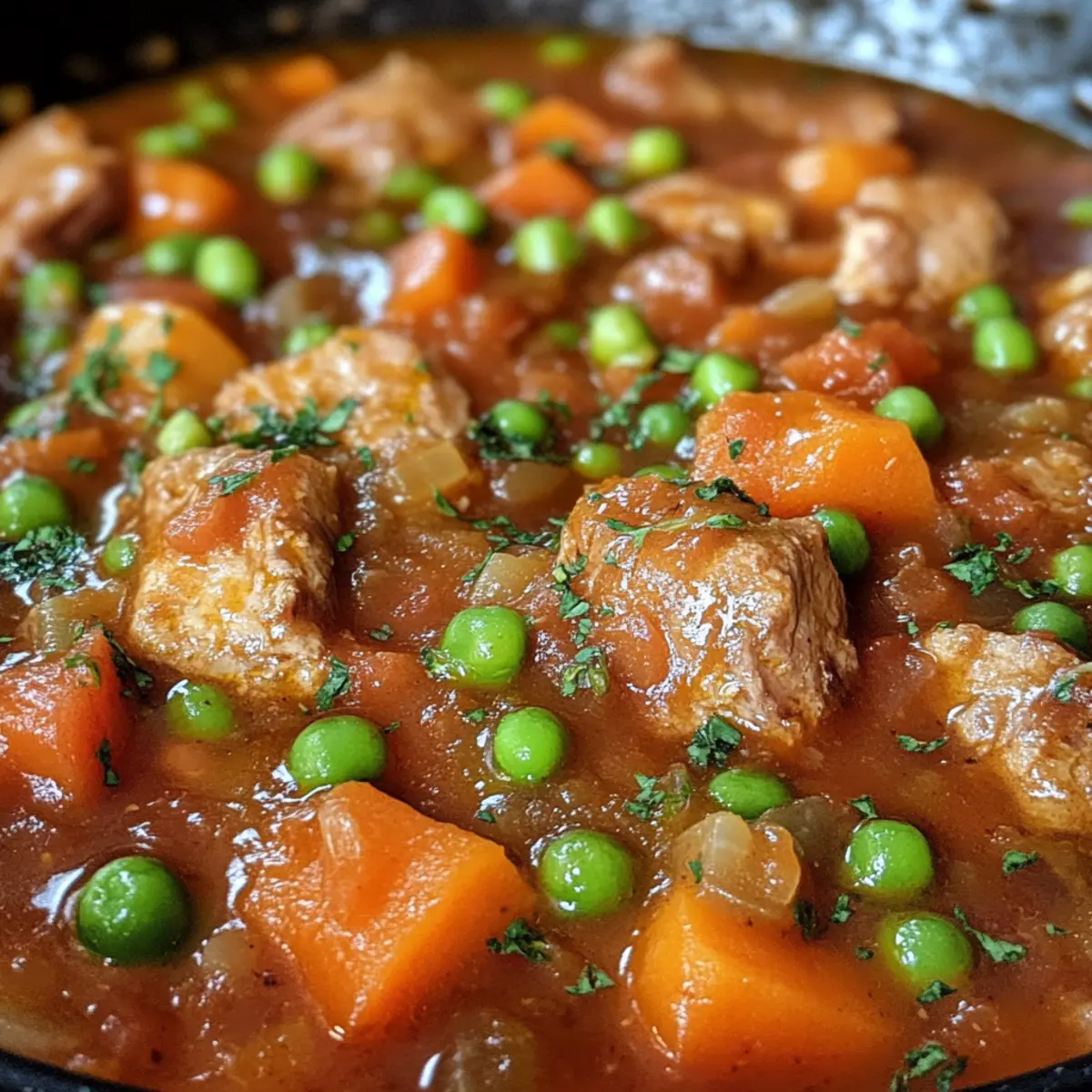
Why is Rabbit Stew a Must-Try?
Comforting warmth: This dish wraps you in cozy flavors, perfect for chilly nights or family gatherings.
Rich depth: The blend of red wine and herbs deepens the stew’s taste, creating a dish that tantalizes the palate.
Versatile goodness: Swap ingredients for your preference! Try adding seasonal vegetables or spices to personalize your serving.
Easy preparation: With simple steps and minimal fuss, you can enjoy this hearty meal in no time.
Cultural experience: Diving into the tradition of Stuffat tal-fenek isn’t just a meal; it’s a glimpse into Malta’s rich culinary history.
Elevate your dining options with delicious sides like crusty bread or consider serving it over pasta for a comforting twist!
Rabbit Stew Ingredients
For the Stew
• Vegetable Oil – A good cooking medium for browning the rabbit; substitute with olive oil for added flavor.
• Bone-in Rabbit – The main protein source that turns tender during slow cooking; you can ask your butcher for heart and liver if you desire.
• Garlic Cloves – Essential for adding aromatic depth; always choose fresh garlic for the best flavor.
• Onion – Forms the flavor base of the stew; yellow onion works wonderfully to add a touch of sweetness.
• Carrots – Contributes sweetness and a hearty texture; try parsnips for an interesting variation.
• Tomato Paste – Enhances the richness of the sauce; consider tomato puree as an alternative.
• Fresh Thyme – Infuses fragrant herbal notes into the dish; dried thyme can be used if you’re in a pinch (just use half).
• Bay Leaves – Imparts flavor during cooking; remember to discard them before serving!
• Red Wine – Provides acidity and depth; opt for a full-bodied wine to really elevate the flavors—avoid cooking wine.
• Crushed Tomatoes – Forms the stew’s base, offering texture and delicious flavor; canned diced tomatoes are an acceptable substitute.
• Russet Potatoes – Adds heartiness and helps thicken the stew; Yukon gold potatoes also work well.
• Salt – Essential for enhancing all flavors; adjust to your taste preference.
• Black Pepper – Gives seasoning and warmth; white pepper is a good alternative if preferred.
• Frozen Peas – Adds color and a touch of sweetness at the end; fresh peas can be used in season for extra flavor.
Feel the hearty embrace of Rabbit Stew as you prepare this delightful dish—a wonderful adventure in Maltese cuisine!
Step‑by‑Step Instructions for Rabbit Stew
Step 1: Heat the Oil and Brown the Rabbit
Begin by heating a generous splash of vegetable oil in a large Dutch oven over medium-high heat. Once hot, carefully add the bone-in rabbit pieces, browning them on all sides for about 8-10 minutes until golden brown. This step seals in the flavor and adds depth to your Rabbit Stew. Once browned, remove the rabbit from the pot and set aside.
Step 2: Sauté the Aromatics
In the same pot, lower the heat to medium and add minced garlic cloves, chopped onion, and sliced carrots. Sauté for around 5-7 minutes, stirring frequently, until the vegetables are softened and fragrant. This creates a flavorful base for your Rabbit Stew and brings out the sweetness of the ingredients—be sure to scrape up any browned bits from the bottom of the pot.
Step 3: Incorporate Tomato Paste
Next, stir in a couple of tablespoons of tomato paste to the sautéed vegetables and cook for an additional 2-3 minutes. This step enriches the stew’s sauce and builds a layer of umami flavor. As the paste caramelizes slightly, you’ll notice a rich aroma filling your kitchen, making you even more eager to enjoy this comforting dish.
Step 4: Add Rabbit and Herbs
Return the browned rabbit to the pot, along with fresh thyme and bay leaves. Stir to combine all the ingredients thoroughly. The herbs will infuse the Rabbit Stew with aromatic notes while the meat continues to absorb all the savory goodness. Allow it to cook together for another minute or so, enhancing the collective flavors.
Step 5: Pour in the Liquids
Carefully pour in a cup of red wine, followed by crushed tomatoes, diced potatoes, and season with salt and black pepper. Stir to ensure everything is well mixed. The wine adds acidity and richness while the tomatoes create the stew’s base. As the mixture comes to a gentle simmer, you’ll see the ingredients starting to blend harmoniously.
Step 6: Cover and Simmer
Cover the Dutch oven with a lid and reduce the heat to low. Let your Rabbit Stew simmer gently for about 1 hour, checking occasionally to ensure it doesn’t boil. The meat will become tender and delightfully fragrant during this time. You’ll know it’s optimal when a fork easily penetrates the rabbit.
Step 7: Add Peas and Thicken
Finally, stir in frozen peas and allow the stew to simmer uncovered for an additional 5 minutes. This final step not only adds a pop of color but also brings a gentle sweetness to the mix. If you prefer a thicker stew, let it cook a few minutes longer, allowing some of the liquid to evaporate.
Feel free to savor your creation!
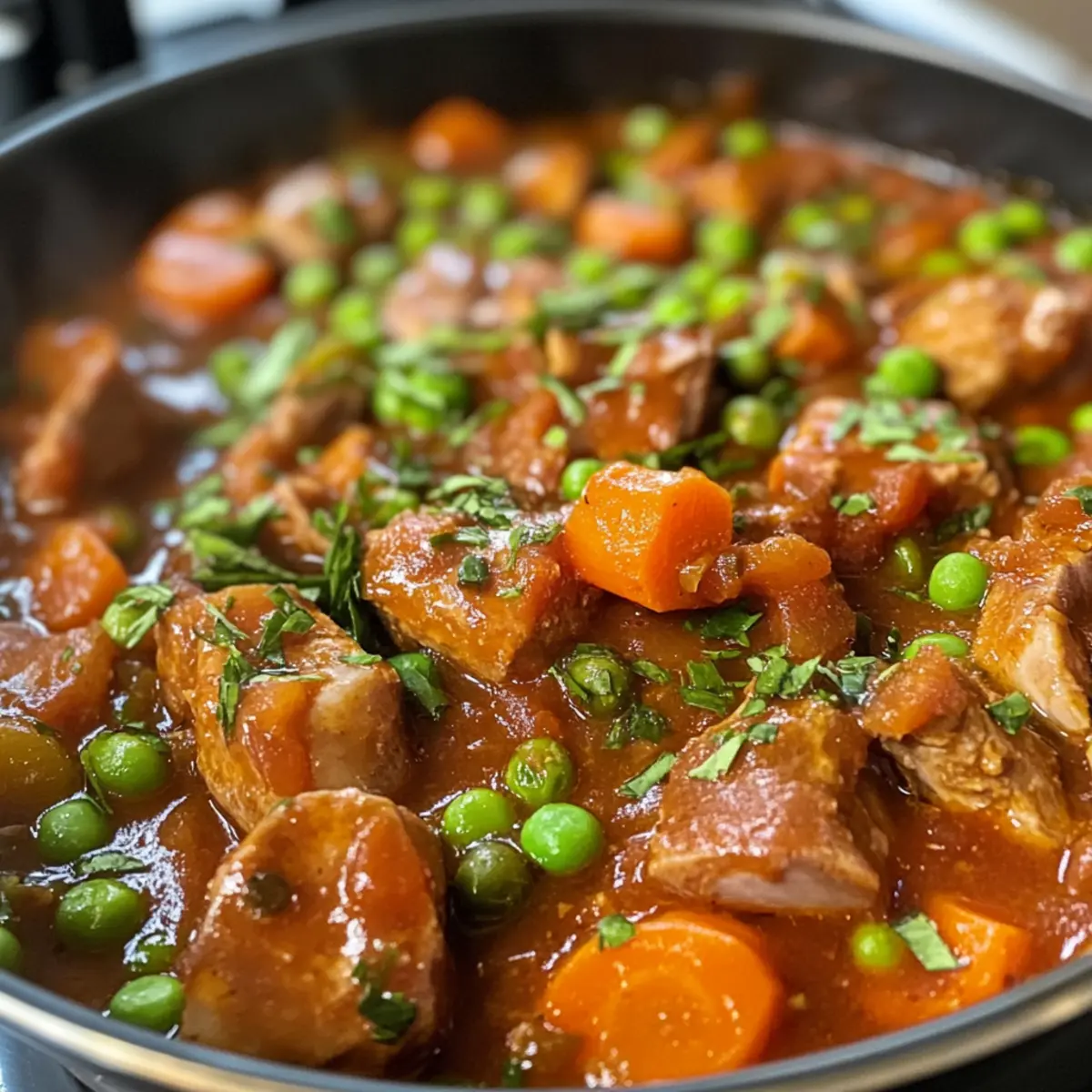
Expert Tips for Rabbit Stew
- Sealing in Flavor: Always brown the rabbit first to enhance the overall depth and richness of your Rabbit Stew. This step is crucial!
- Simmer Slowly: Take your time with the simmering process; rushing can result in tough meat. Patience is key for tenderness.
- Customize Consistency: Adjust the liquid in your stew to achieve your desired consistency. Add water for a saucier finish or let it reduce for a thicker stew.
- Fresh vs. Dried Herbs: Use fresh thyme for the best aroma, but if you’re in a pinch, dried thyme is perfectly acceptable—just halve the amount!
- Don’t Forget the Bay Leaves: Infuse your stew with flavor by adding bay leaves, but remember to remove them before serving for a pleasant experience.
Rabbit Stew Variations & Substitutions
Feel free to explore these fun and simple tweaks to make this Rabbit Stew uniquely yours!
- Dairy-Free: Use olive oil instead of butter for browning to keep it creamy and rich without dairy.
- Vegetarian: Substitute rabbit with hearty mushrooms like portobello or jackfruit to create a plant-based alternative that’s still robust and flavorful.
- Spicy Kick: Add a teaspoon of chili flakes or a diced jalapeño to bring some heat and excitement to your stew.
- Herb Garden Boost: Mix in fresh basil or rosemary for a flavor twist. Each herb brings its own unique aroma and depth that can elevate the dish.
- Root Vegetable Swap: If you’re looking for a twist, consider using sweet potatoes or turnips instead of regular potatoes for a subtle sweetness and different texture.
- Wine Alternatives: If you prefer not to use red wine, opt for broth combined with a splash of vinegar for a similar acidity without the alcohol.
- Savory Umami: Enhance the stew’s depth by adding a tablespoon of soy sauce or Worcestershire sauce, which brightens the overall flavor profile.
- Cultural Fusion: Try adding Moroccan spices like cumin and cinnamon for a completely different take on this traditional stew, creating a delicious medley of flavors reminiscent of other cuisines.
Take your time experimenting with these variations, and remember to serve your Rabbit Stew with some delicious crusty bread or over pasta for a comforting, hearty meal!
Make Ahead Options
These hearty Rabbit Stew preparations are ideal for meal prep! You can brown the rabbit and sauté the vegetables up to 24 hours in advance, then store them in an airtight container in the refrigerator. To maintain their rich flavors, refrigerate the brown meat and sautéed veggies separately until you’re ready to finish cooking. When you’re ready to serve, simply combine the prepared ingredients in a pot, add the remaining liquids and spices, and let them simmer together for about an hour. This way, you’ll have all the comfort of homemade Rabbit Stew without the last-minute rush, making it perfect for busy weeknights!
What to Serve with Maltese Rabbit Stew (Stuffat tal-fenek)
Imagine the warm stew bubbling away, inviting you to create the perfect meal around it.
- Creamy Polenta: The soft, buttery texture serves as a luscious contrast to the hearty stew, soaking up the rich sauce beautifully.
- Crusty Bread: A must-have for dipping and savoring every drop of the savory broth, this classic pairing adds a delightful crunch.
- Roasted Vegetables: The caramelized sweetness of seasonal veggies complements the robust flavors, enhancing the meal’s nutritional profile.
- Garlic Mashed Potatoes: Fluffy and creamy, these mashed potatoes create a comforting base that perfectly accentuates the stew’s hearty essence.
- Fresh Green Salad: A refreshing salad with bright vinaigrette provides a light, crisp contrast, balancing the richness of the Rabbit Stew.
- Pasta with Olive Oil: Tossed with a hint of garlic and herbs, the pasta helps capture the stew’s flavors and enhances the overall dining experience.
- Red Wine: A glass of bold red wine echoes the stews’ flavors, making each bite more aromatic and enjoyable—perfect for a special occasion!
- Lemon Tart: Following a hearty serving, this dessert’s bright acidity refreshes the palate, ending the meal on a light, zesty note.
- Grilled Asparagus: Charred and vibrant, asparagus adds an elegant touch, contrasting beautifully with the stew’s warmth and depth.
- Cheese Platter: Pair with mild cheeses for a delightful end to a cozy dinner, providing varied textures and flavors to round off the meal.
How to Store and Freeze Rabbit Stew
Fridge: Store leftover Rabbit Stew in an airtight container for up to 3 days. The flavors will continue to meld and improve upon reheating.
Freezer: Freeze Rabbit Stew in portioned airtight containers for up to 3 months. Thaw overnight in the fridge before reheating for best results.
Reheating: Reheat on the stovetop over medium heat, stirring occasionally, until heated through. Add a splash of water or broth if it seems too thick.
Serving: Enjoy reheated Rabbit Stew on its own or revive it with fresh herbs for a delightful meal any day of the week!
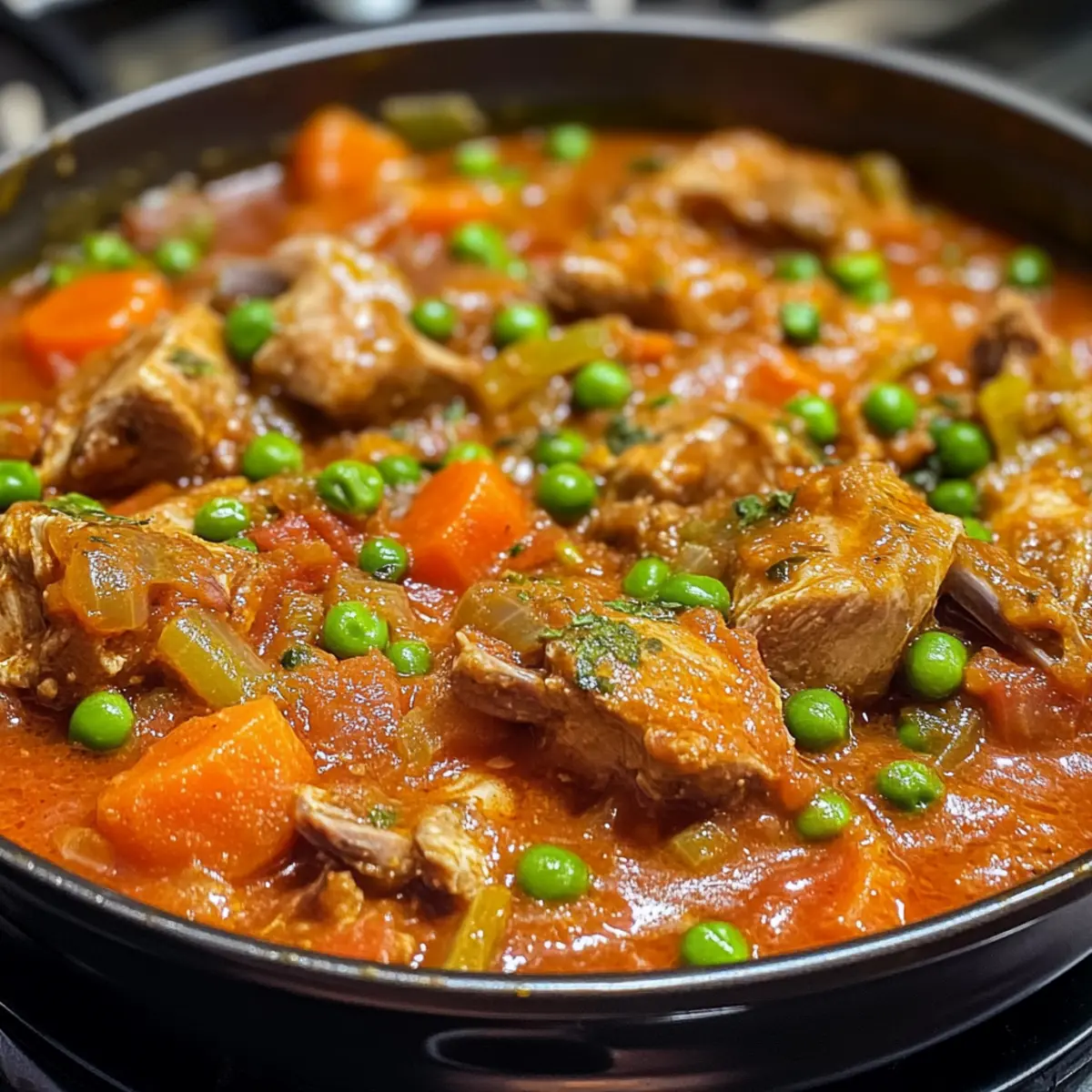
Rabbit Stew (Stuffat tal-fenek) Recipe FAQs
What kind of rabbit should I use for the stew?
Absolutely! For the best flavor and tenderness, I recommend using bone-in rabbit. This cut keeps the meat moist and flavorful during the slow cooking process. If you like, ask your butcher for heart and liver, which can add unique depth to the stew.
How should I store leftovers?
Store any leftover Rabbit Stew in an airtight container in the refrigerator for up to 3 days. The wonderful flavors tend to deepen and improve upon reheating, making it even more delicious when you’re ready for round two!
Can I freeze Rabbit Stew? If so, how?
Yes, you can certainly freeze Rabbit Stew! Portion it into airtight containers and freeze for up to 3 months. To thaw, simply place it in the refrigerator overnight before reheating. Reheat on the stovetop over medium heat, adding a splash of water or broth if it feels too thick.
What if my stew is too thin?
No worries! If your Rabbit Stew turns out too thin, simply remove the lid and let it simmer uncovered for a few minutes. Keep an eye on it as it reduces, stirring occasionally until it reaches your desired thickness. You can also mix a tablespoon of cornstarch with a bit of water and stir it in to help thicken it up quickly!
Can I use different vegetables or substitutes in this recipe?
Very much so! This stew is quite versatile. If you don’t have carrots on hand, consider using parsnips for a similar sweetness. Also, feel free to experiment with herbs—dried thyme can substitute for fresh thyme in a pinch, just use half the amount to maintain flavor balance.
Are there any dietary considerations for this Rabbit Stew?
Absolutely! Be mindful of any allergies, particularly if serving to guests. Rabbit is considered a lean alternative for poultry, making it a healthier option. However, if you have guests with specific dietary restrictions or prefer not to use wine, you can substitute it with additional broth for a delicious and alcohol-free version.
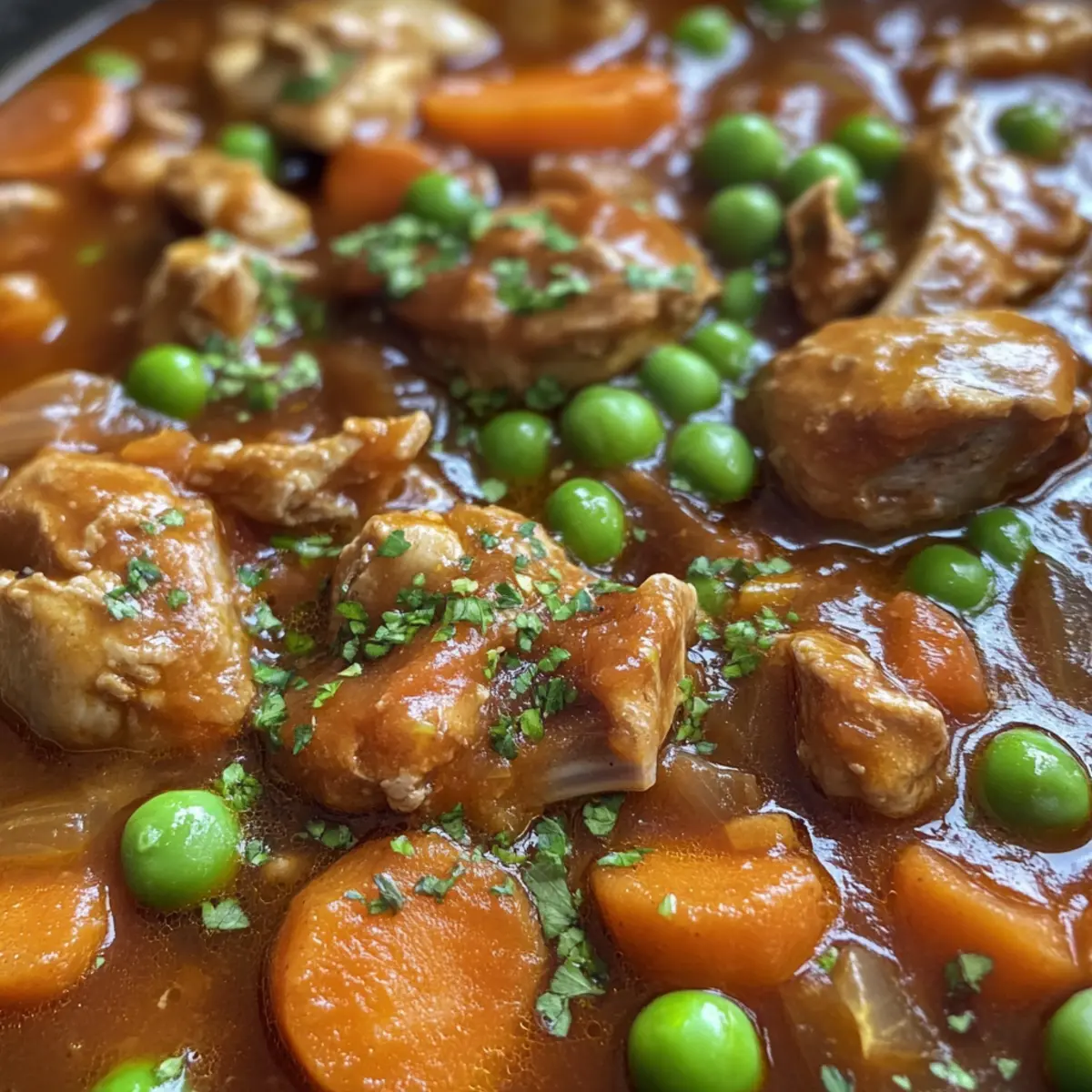
Hearty Rabbit Stew: A Taste of Traditional Maltese Comfort
Ingredients
Equipment
Method
- Heat the oil in a large Dutch oven over medium-high heat. Add the bone-in rabbit pieces, browning them on all sides for 8-10 minutes until golden brown. Remove and set aside.
- Lower the heat to medium and add minced garlic, chopped onion, and sliced carrots. Sauté for 5-7 minutes until softened and fragrant.
- Stir in the tomato paste and cook for an additional 2-3 minutes, allowing it to caramelize slightly.
- Return the browned rabbit to the pot with fresh thyme and bay leaves, stirring to combine.
- Pour in the red wine, followed by crushed tomatoes and diced potatoes. Season with salt and black pepper, and stir well.
- Cover and let the rabbit stew simmer on low heat for about 1 hour, checking occasionally.
- Stir in frozen peas and simmer uncovered for an additional 5 minutes before serving.