


As I stood in my kitchen, the enticing aroma of sautéed vegetables and simmering sesame oil filled the air, instantly transporting me to the bustling streets of Seoul. Japchae is a cherished gem of Korean cuisine, with its unique sweet potato glass noodles that offer a delightful chew and subtly sweet flavor profile. What draws me to this recipe is not just its vibrant colors and comforting taste, but also the ease of customizing it to fit my pantry—whether I add tender beef, juicy chicken, or creamy tofu. This dish serves as the perfect centerpiece for festive gatherings or a cozy weeknight dinner, bringing everyone together. Plus, it’s naturally gluten-free if you use the right soy sauce! Are you ready to whip up a batch of this irresistible dish that’ll have your family and friends asking for seconds?
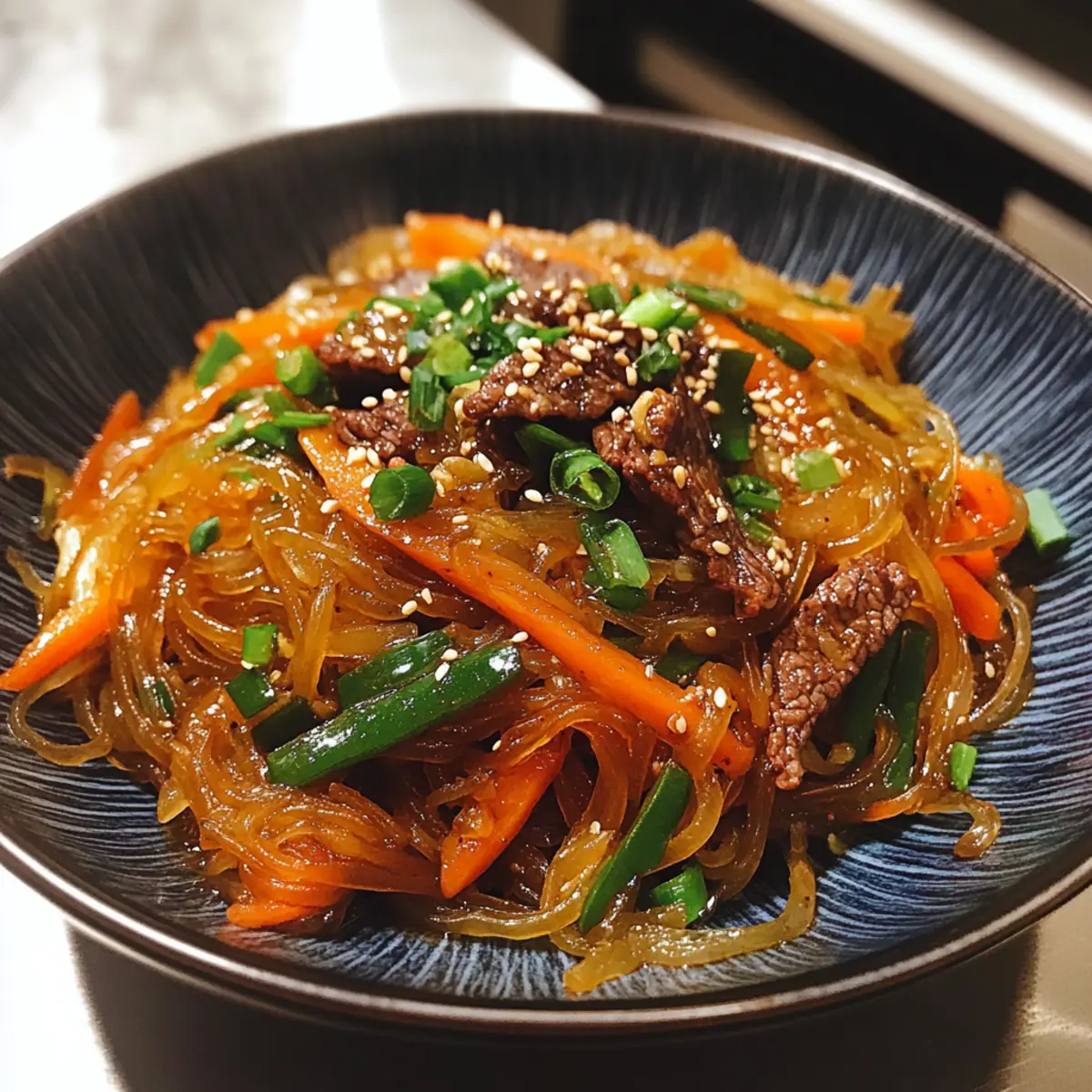
Why is Japchae a Must-Try Dish?
Vibrant Colors: The variety of vegetables in this dish creates a stunning visual appeal that makes every plate an invitation to enjoy!
Customizable Protein: Whether you prefer tender beef, juicy chicken, or plant-based tofu, Japchae can be tailored to your dietary liking.
Quick Prep Time: With simple ingredients and straightforward cooking steps, you can have a delicious meal on the table in just 30 minutes!
Crowd-Pleasing Comfort: This dish is perfect for sharing at gatherings or as a comforting weeknight dinner that warms the heart.
Nutritional Boost: Rich in vitamins and minerals from fresh veggies, Japchae is not only tasty but also satisfying and nutritious. Discover more about customizing this dish with seasonal ingredients by checking out my tips for tasty vegetable substitutions.
Japchae Ingredients
For the Noodles
• Sweet Potato Glass Noodles (Dangmyeon) – These unique noodles provide a delightful chewiness; be sure to soak them until just tender to soak in the flavors.
For the Protein
• Beef (or chicken/tofu) – Offers essential protein and enhances the dish’s flavor; opt for lean cuts or firm tofu for a healthier alternative.
For the Vegetables
• Carrots – Adds a touch of sweetness and vibrant color; slice them thin for quicker cooking.
• Bell Peppers – Brings a crunch and colorful addition; any variety works well!
• Spinach – Infuses freshness and nutrients; add it to the pan just until wilted.
• Onions – Provides a savory base; sauté until just translucent for sweetness.
For the Seasoning
• Soy Sauce – The main seasoning for depth and umami; low-sodium options are great for a healthier choice.
• Sesame Oil – This adds a rich, nutty flavor; a little goes a long way, so use it sparingly!
• Gochujang (optional) – For those who enjoy a bit of spice, add this Korean chili paste to taste for extra kick.
For the Garnish
• Green Onions – Brightens the dish and adds freshness; slice them thinly for the best presentation.
Get ready to create this fantastic dish, where every bite of Japchae is a celebration of flavors and textures!
Step‑by‑Step Instructions for Japchae
Step 1: Prep Noodles
Begin by soaking the sweet potato glass noodles (Dangmyeon) in a bowl of hot water for 30 minutes, or until softened and pliable. Ensure they are just tender without overcooking, as they will continue to absorb flavors later. Once ready, drain the noodles and set them aside while you prepare the rest of the ingredients.
Step 2: Cook Protein
In a large non-stick skillet or wok, heat a tablespoon of oil over medium-high heat. Add the beef (or chicken/tofu) and sauté for about 4-5 minutes, until browned and cooked through. Once cooked, remove the protein from the pan and place it on a plate, allowing the juices to settle while you continue with the vegetables.
Step 3: Sauté Vegetables
Using the same skillet, add a little more oil if necessary, and toss in your sliced carrots, bell peppers, and onions. Stir-fry them over medium heat for approximately 3-4 minutes until the vegetables are vibrant and just tender but still maintain a slight crunch. Add the spinach in the final minute, allowing it to wilt, soaking in all those delicious aromas.
Step 4: Combine Ingredients
Return the cooked beef (or chicken/tofu) to the skillet with the sautéed vegetables. Add the soaked noodles, low-sodium soy sauce, and a drizzle of sesame oil. Toss everything together gently for 2-3 minutes, ensuring the noodles are evenly coated and heated through, absorbing the wonderful flavors of the Japchae.
Step 5: Garnish and Serve
Once well combined, check the seasoning and adjust as necessary. Transfer your beautifully vibrant Japchae to a serving dish, and finish by garnishing with thinly sliced green onions. Serve warm, and enjoy this hearty and colorful Korean delicacy that’s sure to impress your family and friends!
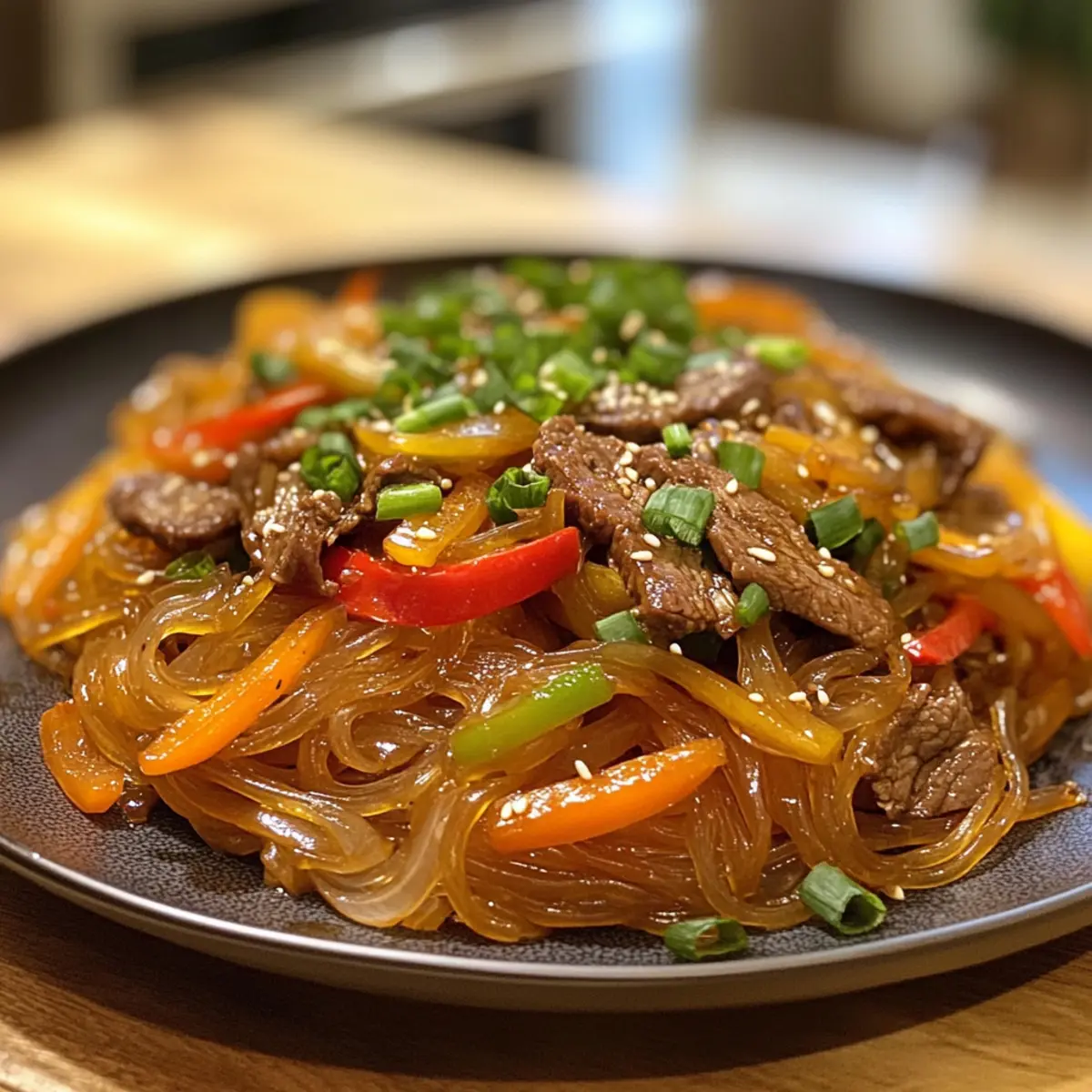
Japchae Variations & Substitutions
Feel free to get creative with your Japchae, making it a personal masterpiece that fits your tastes and dietary needs!
-
Vegetable Variety: Substitute zucchini, mushrooms, or broccoli for a seasonal twist. Consider a colorful mix to increase visual appeal and nutrition.
-
Vegan Delight: Switch out beef for tofu, and use mushroom soy sauce to keep it plant-based. It’s a fulfilling version that still delivers on taste.
-
Spicy Kick: Add sliced chilies or a dollop of gochujang for a fiery punch. Spice lovers will appreciate the extra warmth this brings!
-
Gluten-Free: Opt for gluten-free soy sauce to accommodate dietary restrictions without sacrificing flavor. There’s no need to miss out on delicious Korean cuisine!
-
Nutty Boost: Toasted sesame seeds can be sprinkled over the top for additional crunch and nuttiness. They enhance the overall texture and flavor profile beautifully.
-
Crispy Additions: For a delightful crunch, consider topping your Japchae with crispy fried onions or even crushed nuts. They provide a satisfying contrast to the dish’s tenderness.
-
Protein Panache: Experiment with shrimp or tempeh as protein alternatives for a unique twist that caters to different palates. It’s all about mixing things up!
For more tips on how to enhance your meals, check out my guide on delicious ingredient swaps that can transform your cooking experience!
Expert Tips for Perfect Japchae
- Noodle Texture: Ensure the sweet potato glass noodles are not overcooked; they should be chewy and absorb flavors well. Soaking is key!
- Protein Choices: If using chicken or tofu, ensure they are cooked through completely. Adjust cooking time as needed to keep proteins tender.
- Veggie Variety: Feel free to use any seasonal vegetables you love. Just remember to cut them thinly for even cooking and tenderness in your Japchae.
- Flavor Boost: Taste and adjust the seasoning before serving. Add a splash more soy sauce or sesame oil if you desire an extra layer of flavor!
- Serving Tips: Japchae is best enjoyed fresh, but leftovers can be stored in an airtight container for up to three days. Reheat gently to maintain texture.
What to Serve with Japchae
When crafting the perfect meal around this exquisite stir-fried noodle dish, consider these delightful accompaniments to enhance your dining experience.
- Kimchi: This traditional Korean side dish adds a spicy, tangy kick, perfectly balancing the subtle sweetness of Japchae.
- Steamed Rice: Soft and fluffy rice is ideal for soaking up the extra flavors of the stir-fry, providing a comforting base to your meal.
- Korean BBQ: Tender grilled meat reflects the rich umami flavors of Japchae, offering a robust contrast and making for a satisfying feast.
- Vegetable Pancakes: Crispy and savory, these pancakes add a delightful crunch that complements the chewy texture of Japchae beautifully.
- Sesame Spinach Salad: A fresh, slightly nutty salad introduces a burst of color and lightness, enhancing the overall meal experience.
- Fruit Sorbet: End your meal on a refreshing note with a fruit sorbet, cleansing the palate and bringing a sweet finish to the table.
- Ginger Tea: A warm, fragrant beverage that soothes and comforts, making it the perfect drink to enjoy alongside your homemade Japchae.
- Miso Soup: Light and soothing, miso soup provides a warm contrast to the textures in Japchae while offering a nourishing component to the meal.
Make Ahead Options
These Japchae are perfect for busy home cooks looking to save time! You can prepare the sweet potato glass noodles and chop your vegetables up to 24 hours in advance. Simply soak the noodles, drain them, and store them in an airtight container in the refrigerator, as this helps retain their chewy texture. The sliced vegetables can also be prepped ahead and kept in the fridge, allowing you to quickly sauté them later. When you’re ready to serve, just follow the final steps: sauté your protein, toss everything together with the prepped noodles, and you’ll have a delicious, vibrant Japchae ready in no time, just as fresh as if you made it all at once!
How to Store and Freeze Japchae
Fridge: Store leftover Japchae in an airtight container for up to 3 days to maintain freshness and flavor.
Freezer: If you want to keep Japchae longer, freeze it for up to 2 months. Allow it to cool completely, then portion it into freezer-safe bags or containers.
Reheating: To reheat, thaw overnight in the fridge if frozen. Warm in a skillet with a splash of water over medium heat, stirring occasionally to prevent sticking.
Serving Tip: Enjoy Japchae warm as the textures and flavors meld beautifully when reheated!
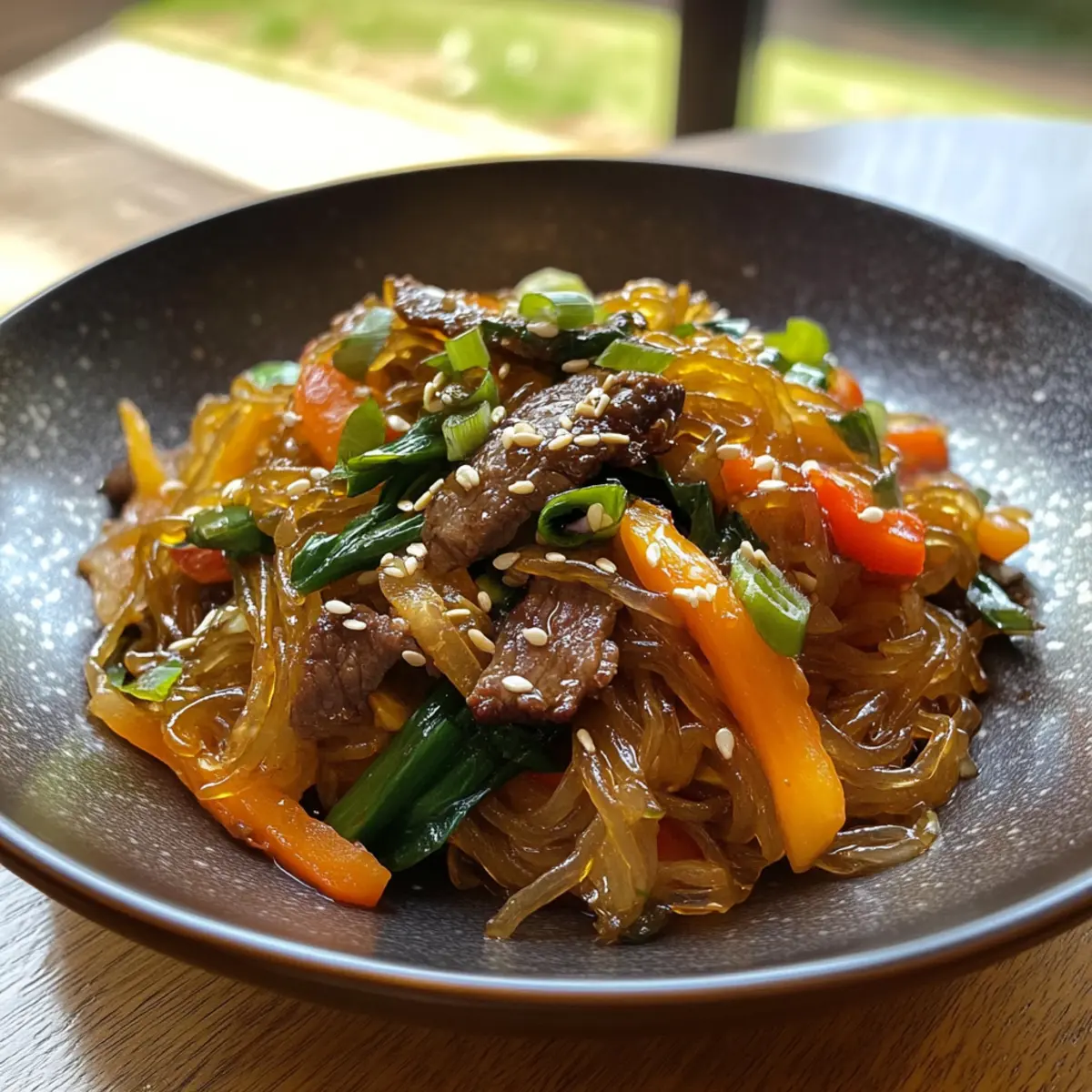
Japchae Recipe FAQs
How do I select the best sweet potato noodles?
Absolutely! When choosing sweet potato glass noodles (Dangmyeon), look for packages that are clear and without any dark spots or damage. High-quality noodles should be slightly translucent. I recommend checking for a firm texture, and avoid any that are overly soft or sticky, as they may be old.
How should I store leftover Japchae?
Very simply! Place leftover Japchae in an airtight container in the fridge, and it should retain its deliciousness for up to 3 days. To avoid the noodles becoming too dry, reheat them gently in a pan with a splash of water.
Can I freeze Japchae?
Certainly! To freeze Japchae, let it cool completely, then portion it into freezer-safe bags. You can keep it in the freezer for up to 2 months. When ready to eat, thaw it overnight in the fridge and heat it up in a skillet over medium heat, adding a little water to revive the texture.
What if I overcook the noodles?
No worries at all! If you accidentally overcook the sweet potato noodles and they become mushy, they’re still usable, but take care to combine them gently with the other ingredients. Add the noodles towards the end of cooking to maintain some structure, and consider using additional fresh vegetables or proteins to enhance texture and flavor.
Is Japchae safe for people with gluten intolerance?
Yes! Japchae is gluten-free if you use gluten-free soy sauce, which you can easily find in most grocery stores. Just ensure all your ingredients, especially sauces, are confirmed to be gluten-free, making it a safe option for those with dietary restrictions.
What’s a good way to make Japchae vegetarian?
Very easy! Simply replace the beef with extra firm tofu or your favorite plant-based protein. You can also enhance the dish with a bit of extra soy sauce and seasonal vegetables like zucchini or bell peppers for added color and flavor. Enjoy experimenting with your favorite veggie combinations!
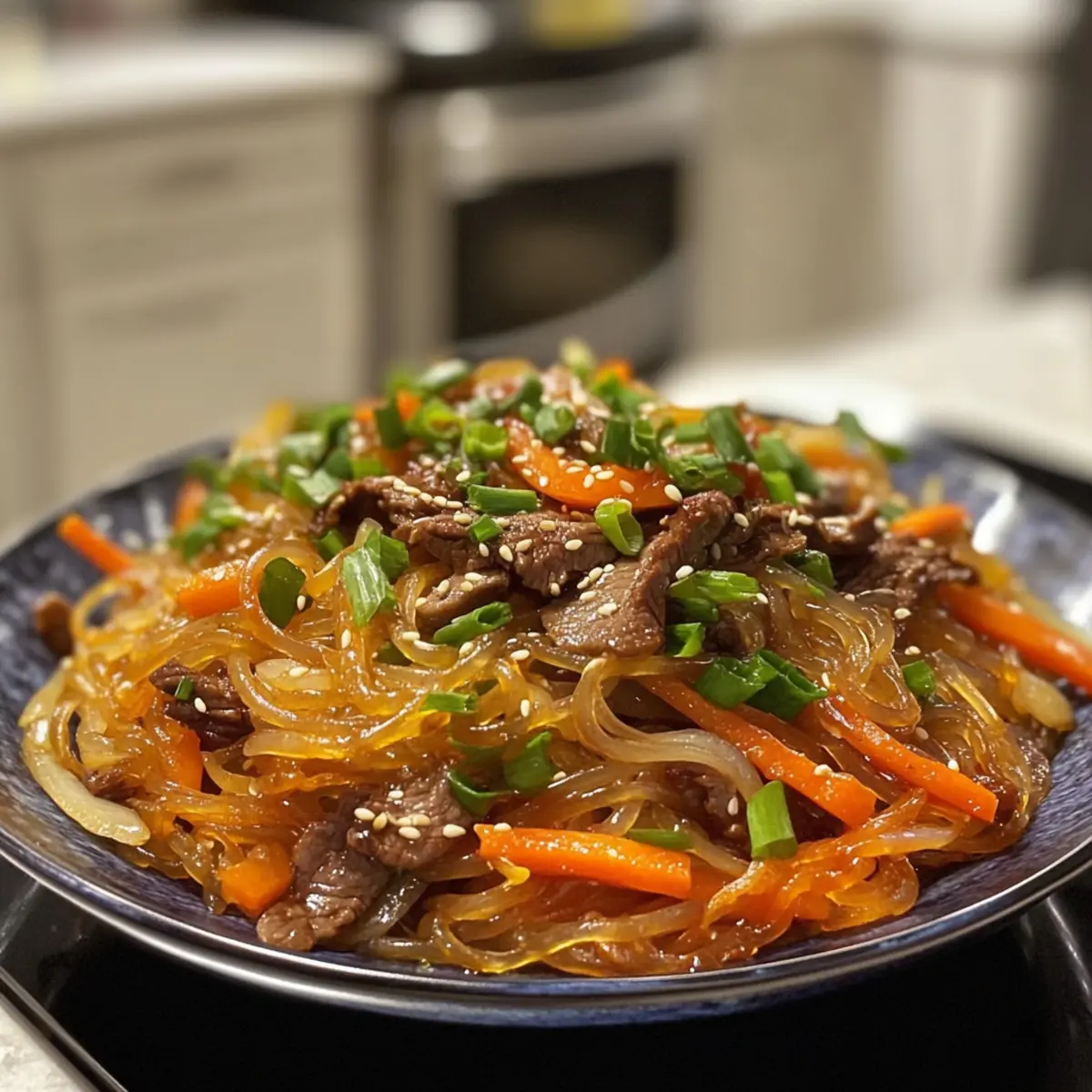
Savory Japchae: A Heartwarming Korean Noodle Delight
Ingredients
Equipment
Method
- Soak the sweet potato glass noodles in a bowl of hot water for 30 minutes, or until softened. Drain and set aside.
- In a large skillet, heat oil over medium-high heat. Add beef, cooking for 4-5 minutes until browned. Remove and set aside.
- In the same skillet, add carrots, bell peppers, and onions. Stir-fry for 3-4 minutes until vibrant. Add spinach for the last minute to wilt.
- Return the protein to the skillet with vegetables. Add soaked noodles, soy sauce, and sesame oil, and toss for 2-3 minutes.
- Garnish with green onions and serve warm.