


As I stirred the glossy black bean sauce, the rich, savory aroma whisked me away to the bustling streets of Seoul. Jajangmyeon, or Korean Black Bean Noodles, is my go-to comfort food, effortlessly combining chewy noodles with a sauce that’s both umami-rich and soul-warming. Not only does this recipe showcase those simple ingredients in a way that is welcoming for beginners, but it also allows seasoned chefs to flex their creativity by swapping in seafood or going vegetarian. Plus, it’s perfect for a weeknight dinner, making it a quick yet satisfying meal to please the whole family. Are you ready to dive into a bowl of nostalgia that promises to elevate your dinner game?
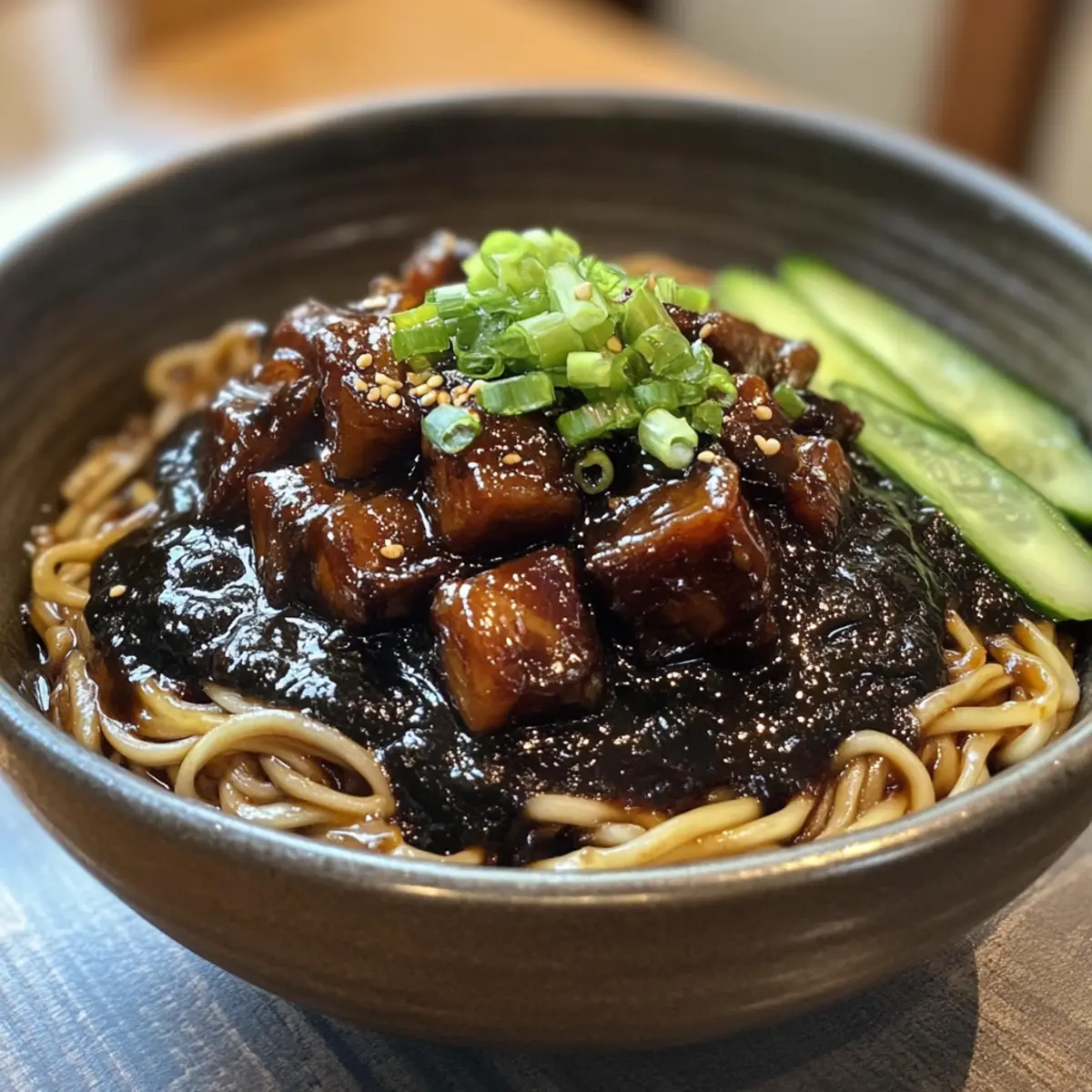
Why is Jajangmyeon a Must-Try?
Comforting and Delicious: Jajangmyeon is the ultimate comfort food, providing a warm embrace with every bite. Customizable Options: Whether you’re a meat lover or a vegetarian, this dish adapts beautifully—try it with seafood or tofu! Quick Preparation: With simple ingredients and straightforward steps, it’s perfect for busy weeknights. Family-Friendly Appeal: The rich, savory flavor and playful textures invite everyone to the table, making it a crowd-pleaser. Don’t forget to serve it with pickled radish and the famous Korean fried dumplings for a complete feast! This traditional dish is a delightful way to elevate your home cooking, just like our Spicy Caribbean Mahi or explore the tropical flavors with Blackberry Pineapple Coconut.
Jajangmyeon Ingredients
For the Sauce
• Vegetable Oil – Provides necessary fat for sautéing; substitute with sesame oil for a nutty flavor.
• Pork Belly – Adds richness and texture; use diced tofu or mushrooms for a vegetarian/vegan version.
• Onion – Contributes sweetness and aroma; shallots can also be substituted if preferred.
• Zucchini – Adds moisture and nutritional value; other vegetables like bell peppers make a great swap.
• Potato – Thickens the sauce naturally and offers heartiness; sweet potato works well too.
• Garlic – Enhances the overall flavor profile; fresh garlic is preferred for its authenticity.
• Korean Black Bean Paste (Chunjang) – The key ingredient for that unique Jajangmyeon flavor; look for it in Asian grocery stores.
• Sugar – Balances the sauce’s flavors; can be replaced with honey or maple syrup for a unique sweetness.
• Oyster Sauce – Adds depth; use soy sauce for a vegetarian alternative.
• Water – Helps create the proper consistency for the sauce.
• Cornstarch + Water (slurry) – Thickens the sauce effectively; arrowroot powder can be a gluten-free substitute.
• Salt and Pepper – Essential for seasoning to taste; adjust based on the other ingredient flavors.
For the Noodles
• Fresh Jajangmyeon Noodles – Offers the best texture, but thick wheat noodles can be used as a substitute.
For Garnish (Optional)
• Julienne Cucumber – Adds freshness and crunch; shredded carrots can also brighten the dish!
Dive into the delightful world of Jajangmyeon, and let the flavors transport you to Korea’s vibrant culinary landscape!
Step‑by‑Step Instructions for Jajangmyeon (Korean Black Bean Noodles)
Step 1: Heat the Oil
In a large, non-stick pan, heat 2 tablespoons of vegetable oil over medium-high heat. Allow the oil to shimmer slightly, indicating that it’s hot enough to start cooking. Once heated, add 200g of diced pork belly, frying until browned and crispy, which should take about 5 minutes.
Step 2: Sauté the Vegetables
Add 1 chopped onion, 1 diced zucchini, and 1 diced potato to the pan with the pork belly. Stir well and sauté for 5–7 minutes until the vegetables are tender and have released their juices. Keep an eye on them; you want them softened without losing their shape.
Step 3: Add Garlic
Once the vegetables are softened, stir in 3 minced garlic cloves and sauté for an additional minute. You’ll know it’s ready when the garlic becomes aromatic and starts to slightly turn golden, enhancing the dish with a rich flavor.
Step 4: Incorporate the Sauce Ingredients
Next, mix in 3 tablespoons of Korean black bean paste (chunjang) and 1 tablespoon of sugar. Stir everything together until the pork and vegetables are well-coated, allowing the paste to toast slightly in the hot pan for about 1-2 minutes.
Step 5: Simmer with Liquid
Pour in 1 tablespoon of oyster sauce and 1 cup of water, stirring to combine. Bring the mixture to a simmer, cover the pan with a lid, and let it cook for 8–10 minutes. During this time, the vegetables will become fork-tender and the sauce will thicken.
Step 6: Thicken the Sauce
After simmering, stir in a cornstarch slurry made of 1 tablespoon of cornstarch mixed with 2 tablespoons of water. This will help thicken the sauce to your desired consistency. Season with salt and pepper to taste—aim for a balanced flavor in your Jajangmyeon.
Step 7: Prepare the Noodles
While the sauce is finishing up, cook 300g of fresh Jajangmyeon noodles according to the package instructions. Generally, this will take about 4–5 minutes. Once cooked, drain and rinse them under cold water to stop the cooking process and prevent sticking.
Step 8: Serve it Up
To serve, place a generous portion of the Jajangmyeon noodles on a plate and ladle the rich black bean sauce over the top. For a refreshing crunch, garnish with julienned cucumber or shredded carrots. Enjoy your home-cooked Jajangmyeon experience!
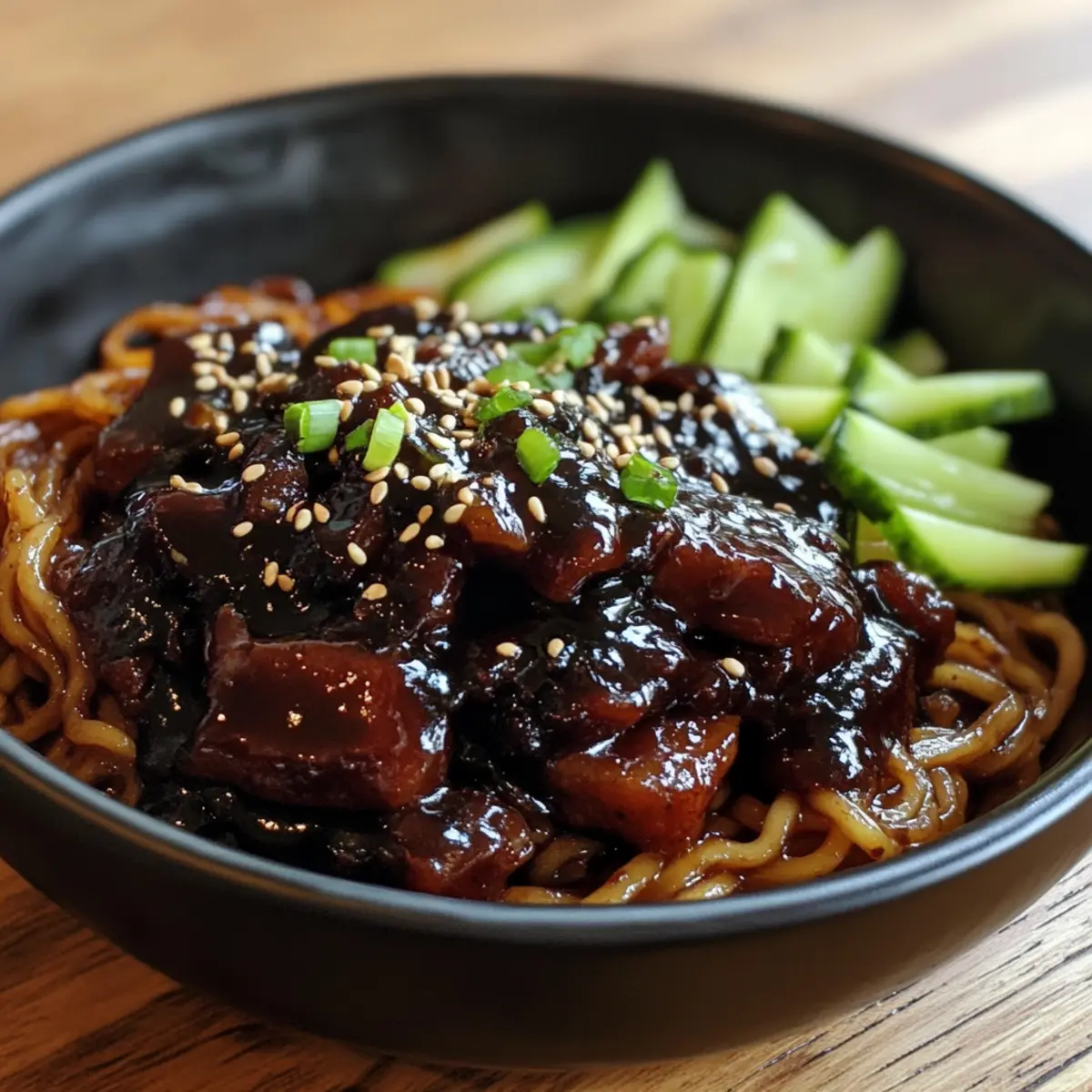
Jajangmyeon Variations & Substitutions
Feel free to make Jajangmyeon your own with these delightful twists that enhance flavors and cater to your dietary preferences!
-
Seafood Jajangmyeon: Swap pork belly for shrimp, squid, or mussels for a delightful oceanic twist. The seafood harmonizes wonderfully with the black bean sauce, complementing its rich umami flavor.
-
Vegetarian Option: Replace pork with diced tofu, mushrooms, or seitan to create a fulfilling dish that’s equally satisfying and hearty. This is a great way for non-meat eaters to enjoy the same beloved flavors!
-
Vegan Twist: Easily adapt the vegetarian version by ensuring all sauces used are free from animal products. Opt for ingredients like coconut aminos instead of oyster sauce for added depth.
-
Gluten-Free Version: Use rice noodles instead of wheat noodles to enjoy Jajangmyeon without gluten. The chewy texture will still provide that comforting mouthfeel we all adore.
-
Cheesy Jajangmyeon: Grate some cheese into your warm bread for a fusion twist. The creamy texture contrasts beautifully with the savory sauce, bringing a whole new level of indulgence to the dish.
-
Add Spice: For an extra kick, incorporate Korean gochujang or fresh chili peppers into the sauce. This fiery twist will awaken your taste buds and leave you craving more!
-
Seasonal Vegetable Variation: Mix in colorful seasonal vegetables, such as bell peppers or snap peas, to boost nutrition and add a pop of color to your plate. This makes each serving visually appealing and even more nutritious.
By exploring these variations, you can experience the versatility of Jajangmyeon while keeping mealtime exciting. If you’re curious about different flavors, you might enjoy trying our Blackberry Tiramisu Fruity or the refreshing Blackberry Pineapple Coconut. Let your creativity flourish in the kitchen!
Make Ahead Options
Jajangmyeon is an excellent choice for meal prep, allowing you to enjoy this comforting dish with minimal last-minute effort! You can prepare the sauce up to 3 days in advance and simply store it in an airtight container in the refrigerator. For the best quality, cook the pork belly and sauté the vegetables according to the recipe, then mix in the black bean paste and seasonings, allowing the flavors to meld. When you’re ready to eat, cook the noodles (which can be prepared fresh just before serving) and reheat the sauce on low, adding a splash of water if necessary to restore its consistency. This way, you’ll have a delicious, homemade Jajangmyeon ready to enjoy any busy weeknight!
What to Serve with Authentic Jajangmyeon?
Transform your Jajangmyeon experience into a wholesome feast that tugs at the heartstrings with every bite.
- Pickled Radish (Danmuji): This vibrant side adds a refreshing crunch and tanginess, brightening the rich flavors of the black bean sauce.
- Kimchi: The spiciness and fermented goodness offer a lively contrast to the umami-rich noodles, making every bite pop with excitement.
- Korean Fried Dumplings (Gunmandu): Crispy and savory, these dumplings complement Jajangmyeon beautifully, bringing an extra layer of fun to your meal.
- Seaweed Soup (Miyeok-guk): A light yet flavorful broth that provides a delicate balance to the hearty noodles. It’s comforting without overwhelming the palate.
- Green Onion Salad: Crisp and fresh, this salad with a sesame dressing introduces brightness to the dish while enhancing its textures.
- Chilled Soba Noodles: For a unique twist, offer chilled soba on the side. Their nutty flavor and chewy texture work well with the savory sauce, providing a delightful contrast.
- Iced Korean Barley Tea (Boricha): This lightly toasted drink refreshes the palate and enhances your dining experience, making it a perfect accompaniment.
- Fruit Dessert (e.g., Fresh Watermelon): Finish with a refreshing fruit like watermelon to cleanse the palate and bring a sweet, cooling end to your meal.
Each of these sides and drinks offers a unique dimension to your Jajangmyeon spread, making it a meal to remember!
How to Store and Freeze Jajangmyeon
Fridge: Store leftover Jajangmyeon in an airtight container for up to 3 days. Add a splash of water before reheating to maintain the sauce’s rich texture.
Freezer: For longer storage, freeze Jajangmyeon by separating the noodles and sauce into individual portions. They can be stored in airtight containers for up to 2 months.
Reheating: When ready to enjoy, thaw overnight in the fridge and reheat in a saucepan over medium heat, adding a splash of water to revive the sauce.
Texture Reminder: Fresh noodles yield the best results; if reheating, eat promptly to avoid mushiness. Enjoy your comforting meal at its best!
Expert Tips for Jajangmyeon
-
Toast the Paste: Always toast the chunjang in oil before adding it to enhance its flavor and reduce bitterness.
-
Balance Flavors: Carefully adjust sugar and oyster sauce in your Jajangmyeon to achieve a well-rounded umami taste without overpowering sweetness.
-
Fresh Noodles Only: Opt for fresh Jajangmyeon noodles for the best texture; avoid instant noodles to keep the dish authentic and satisfying.
-
Customize Your Veggies: Don’t hesitate to mix in your favorite veggies—bell peppers or carrots can elevate your dish with vibrant color and flavor.
-
Leftover Magic: Store any leftover Jajangmyeon in an airtight container, adding a splash of water upon reheating to restore that luscious sauce consistency.
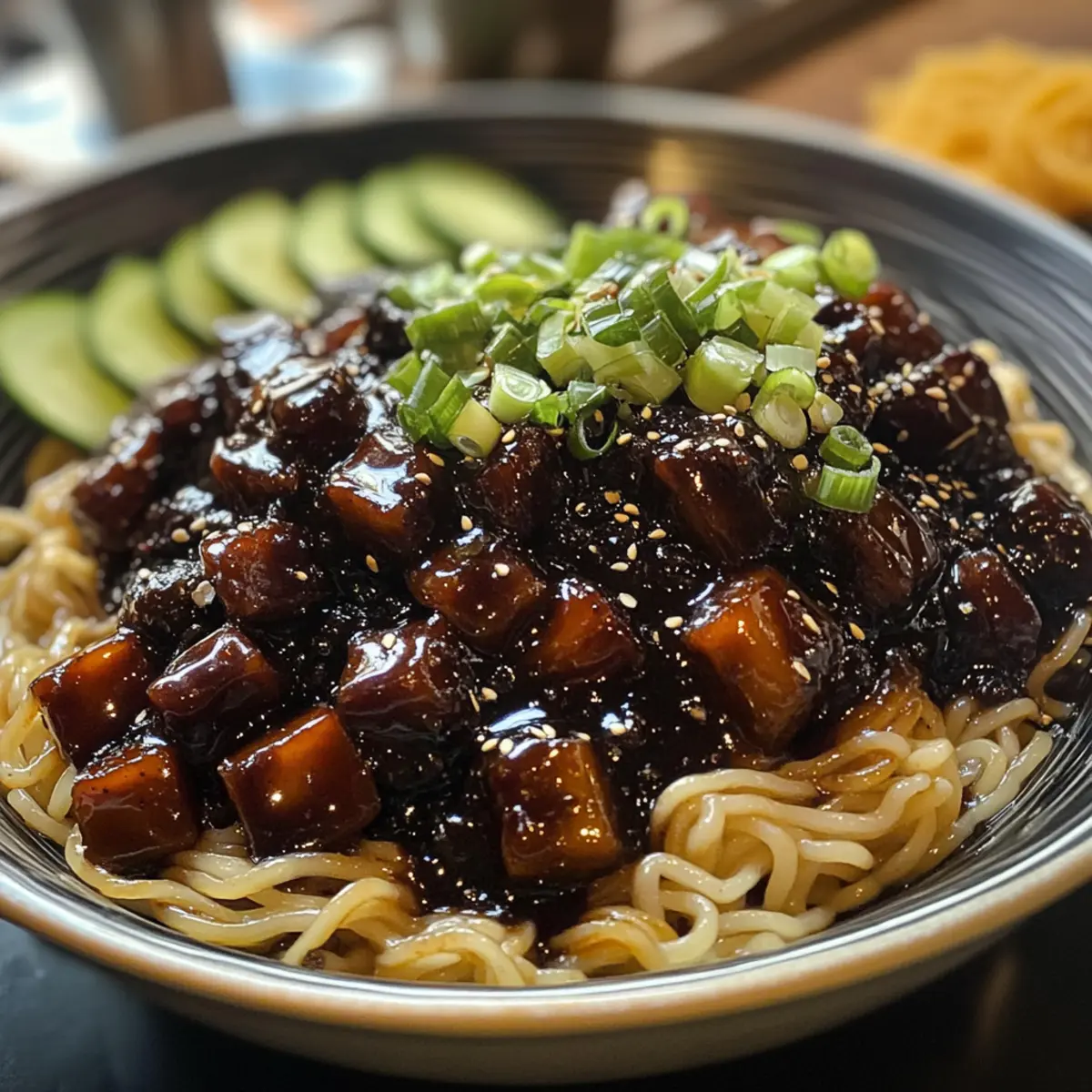
Jajangmyeon (Korean Black Bean Noodles) Recipe FAQs
How do I choose the best ingredients for Jajangmyeon?
Absolutely! For the freshest flavor, pick vegetables that are firm and vibrant in color—avoid any with dark spots or wrinkles. When selecting the pork belly, look for marbled pieces that will crisp nicely. For the chunjang (black bean paste), check Asian grocery stores for the best quality, ensuring that it hasn’t passed its expiration date.
How should I store leftover Jajangmyeon?
Very simple! Transfer any leftovers into an airtight container and keep it in the refrigerator for up to 3 days. When you’re ready to reheat, just add a splash of water to the mixture to help restore the luscious sauce’s consistency and heat gently until warmed through.
Can I freeze Jajangmyeon?
Yes, you can! To freeze Jajangmyeon, separate the noodles and sauce into individual portions. Place both in airtight containers or freezer bags and label them with the date. They can be stored for up to 2 months. When you’re ready to enjoy, thaw them overnight in the fridge, and then reheat in a saucepan over medium heat; you may need to add a bit of water to revive the sauce.
What if my sauce turns out too thick?
No worries at all! If your sauce is thicker than desired, simply add a little water or broth to thin it out. Heat it over low-medium heat while stirring until you reach your preferred consistency. If time allows, let the flavors meld for a few minutes after adding extra liquid for an enhanced taste!
Is Jajangmyeon safe for children or those with allergies?
Certainly! Jajangmyeon can be a family-friendly meal, but be cautious with allergies. Common allergens include soy in the oyster sauce and wheat in the noodles. For a safe version, substitute soy sauce with tamari for a gluten-free option and use fresh vegetables that your family enjoys. Always check labels for ingredients to ensure they are allergy-friendly.
Can I customize the recipe to suit a vegetarian or vegan diet?
Absolutely! Swap out the pork belly for diced tofu or mushrooms, which both provide great texture. For the sauce, replace the oyster sauce with soy sauce to keep it vegetarian-friendly, and simply follow the steps as you would in the traditional recipe for delicious results!
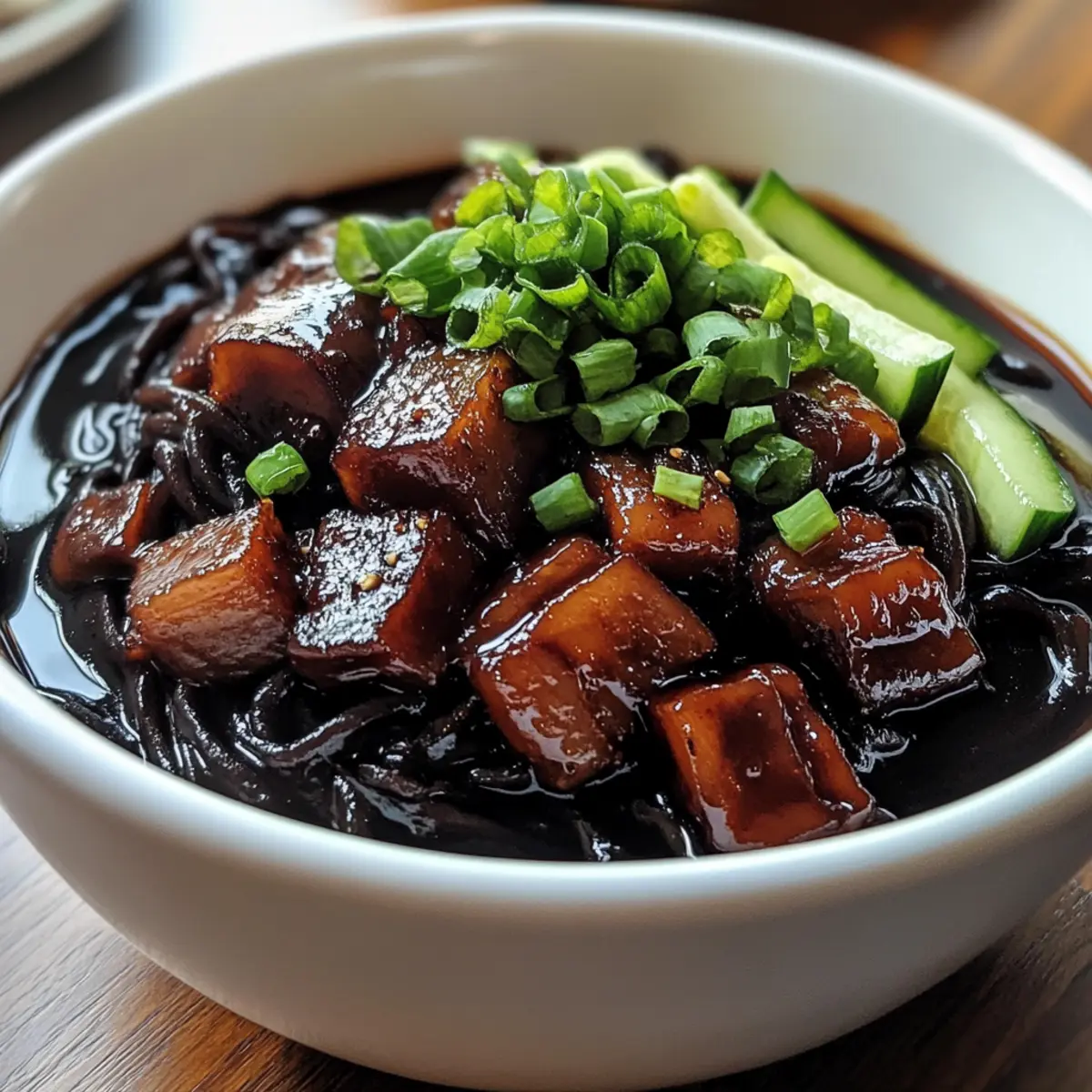
Savor Authentic Jajangmyeon: Irresistible Korean Noodles
Ingredients
Equipment
Method
- In a large, non-stick pan, heat 2 tablespoons of vegetable oil over medium-high heat. Add 200g of diced pork belly, frying until browned and crispy, about 5 minutes.
- Add 1 chopped onion, 1 diced zucchini, and 1 diced potato to the pan. Stir well and sauté for 5-7 minutes until tender.
- Stir in 3 minced garlic cloves and sauté for an additional minute until aromatic.
- Mix in 3 tablespoons of Korean black bean paste and 1 tablespoon of sugar. Stir until well-coated and toast for 1-2 minutes.
- Pour in 1 tablespoon of oyster sauce and 1 cup of water. Bring to a simmer, cover, and cook for 8-10 minutes.
- After simmering, stir in a cornstarch slurry made of 1 tablespoon of cornstarch and 2 tablespoons of water. Season with salt and pepper to taste.
- Cook 300g of fresh Jajangmyeon noodles according to the package instructions, generally about 4-5 minutes. Drain and rinse under cold water.
- Serve the Jajangmyeon noodles on a plate and ladle the sauce over the top. Garnish with julienned cucumber or shredded carrots.